
Treatments · in Airoli
Root canal treatment in Airoli, Navi Mumbai.
A root canal cleans out the infected nerve tissue from inside a tooth and seals the empty space, so the tooth can stay in your mouth instead of being pulled out. It is done under local anaesthetic and is far less painful than the toothache it is treating.
When you need a root canal.
Inside every tooth is a soft tissue called pulp — nerves, blood vessels, and cells. When decay reaches deep enough, or a crack lets bacteria in, the pulp gets infected. Once infected, it does not heal on its own.
The signs are usually obvious: a deep ache that throbs at night, sensitivity to hot or cold that lingers long after the cause is gone, swelling around the gum, or a tooth that hurts when you bite down. Sometimes there is no pain at all and we find it on an X-ray.
What the alternatives are.
The realistic choice is between root canal and extraction. There is no third option that lets you keep the tooth without treating the infection.
If we pull the tooth, the gap can be filled with an implant, a bridge, or a partial denture — none of which are cheaper or simpler in the long run. Saving your own tooth with a root canal is almost always the more conservative choice.
How it works
Usually finished in one or two visits.
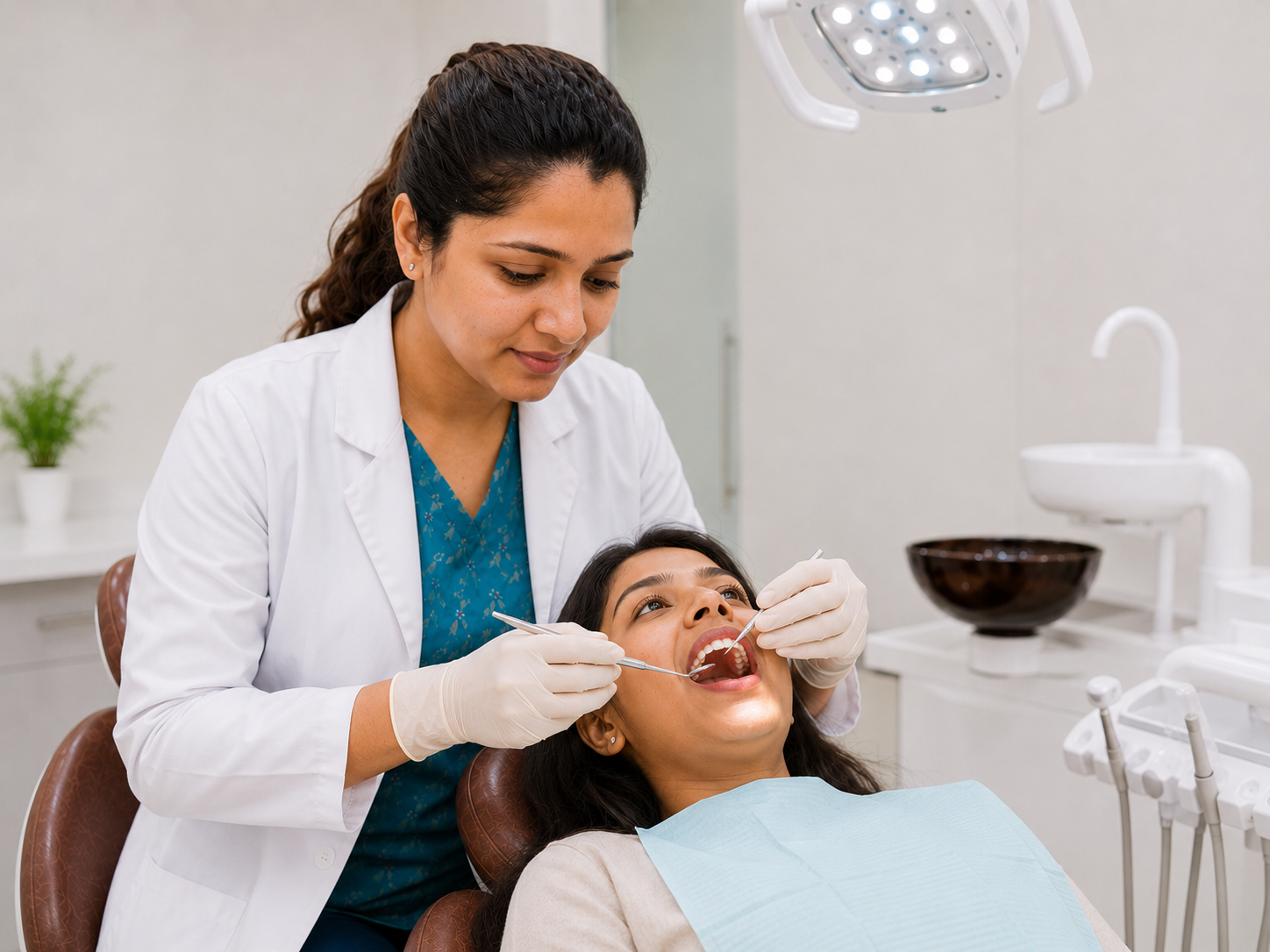
Each visit is 60–90 minutes. You feel pressure and the sound of the equipment, but not pain.
- 01/
Numbing the tooth
Local anaesthetic around the tooth. You feel pressure during the rest of the procedure, but no pain. - 02/
Opening the tooth
A small hole is made through the top of the tooth so we can reach the canals inside. We use a rubber sheet (dam) to keep the area dry and clean. - 03/
Cleaning the canals
Fine instruments and irrigating solutions remove the infected pulp and bacteria from each canal. Most teeth have one to four canals. - 04/
Filling and sealing
The cleaned canals are filled with a rubber-like material and sealed, so bacteria cannot get back in. - 05/
Crown or restoration
A root-treated tooth is more brittle than a healthy one. We almost always put a crown on top in a separate appointment to protect it long-term.
After treatment
A few days of soft food, then back to normal.
- First 24 hours: mild tenderness is normal. Paracetamol or ibuprofen as needed. Chew on the other side.
- Until your crown is fitted: the tooth has a temporary filling. Avoid sticky or very hard foods on that side so you don't dislodge it.
- After the crown: brush and floss the tooth like any other. Six-monthly checks pick up any problem early.
- Warning signs to ring us about: pain that gets worse after 3 days, swelling that spreads to the face, or fever.
The questions we hear most.
If yours isn’t here, ring or message and our team will get back to you.
Is a root canal painful?
No — that is the myth. The pain comes from the infection, and the root canal is what removes the infection. With local anaesthetic the procedure itself is not painful. Most people are relieved by the next morning.How many visits will I need?
Most root canals are done in one or two visits of 60 to 90 minutes each. The crown that protects the tooth afterwards is fitted in one more appointment about a week later.Could I just have the tooth pulled out instead?
You could, and sometimes that is the right call. But removing a tooth means the neighbouring teeth slowly tilt into the gap and the opposite tooth grows down looking for something to bite. Saving the tooth — when we can — keeps everything in line.Why do I need a crown afterwards?
A tooth that has had a root canal loses its blood supply and becomes more brittle. A crown wraps around it and protects it from cracking under chewing pressure for years to come.How long will the treated tooth last?
A well-done root canal with a proper crown commonly lasts 10 to 20 years and often longer. The tooth keeps doing its job; you just clean it normally.What does a root canal cost?
It depends on which tooth and how many canals it has — front teeth are simpler than back molars. Ring or WhatsApp +91 79000 97145 for a real quote after a short check.